Book an event

Music sessions for 2 to 6 year olds —
and a concert their parents will film.

Groups of up to seven children, in your classroom, alongside their own teacher. The year builds towards something the children can show, and the parents can watch.

Discuss a programme

Four separate things. Pick the one you came for:

Service one

Kindergarten sessions

Children 2 to 6 years old, in groups of up to seven, always together with their own teacher — or with an assistant teacher if the class runs in a language other than English.

What happens in a session

  • Instruments explored through guided discovery and play
  • Percussion, simple melodic instruments, dancing, vocal experimentation
  • Basic rhythm and pulse — loud and soft, fast and slow, musical reactions
  • Songs and playful musical games
  • Preparation for, and performances in front of, parents
  • Genres from classical to tango, valse, and folk from many countries
OrffWirthMontessori
Play “Rhythm learning and music adaptation” on YouTube
Rhythm learning, mid-yearKindergarten · China
Play “If You’re Happy and You Know It” on YouTube
End of year, in front of the parentsKindergarten concert

The curriculum

Either the school's own, or one built around the class and what the school wants out of the year.

The reporting

Needs and activities reported in good time, so nothing about the group's progress is a surprise at the end of term.

The teacher stays

A warm connection with the class teacher, with the musical direction kept clear and led from the front.

Service two

Workshops

Parent and infant

Up to one and a half years old, parent and baby together in the room.

Pregnancy and parents

Worked through vibration techniques, for expectant mothers or for parents.
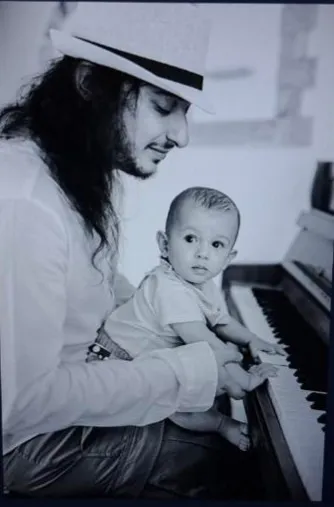
Arranged directly with the institution or the group. Say how many people, what ages, and where — the format is built from there.

Service three

Choir

For companies, institutions or groups that want to take part rather than watch. Children or adults.

  • In person only. This one does not work over a screen.
  • Rehearsals of 1.5 hours.
  • Repertoire chosen together by the conductor and the group.
  • Aimed at a concert with a date on it, in the short term.

How a rehearsal runs

  1. Ice-breaking musical games
  2. Breathing and diaphragmatic practice
  3. Individual work on voices and sections
  4. Building towards the aural and visual presentation
Play “Choir conducting and basic practice” on YouTube
Conducting and basic practiceKindergarten · Shanghai, China

Service four

Music therapy

Private, one-on-one, any age. Shaped around one person's specific challenge or focus.

The direction and the possible outcome depend on that person's need, and are determined honestly and carefully — including when the honest answer is that something else would help more.

What the work uses

  • Simple instrumental interaction
  • Repetitive rhythm patterns
  • Musical and emotional response games
  • Voice, listening, and calming or energizing musical structure

What a school is actually buying.

Where this has been done before

  • 2018–2019Lead Music Teacher and Cultural MediatorFriends of the Vienna Boys Choir Kindergarten — Shanghai, China
  • 2017Piano, Solfège Teacher and Choir ConductorNational Music School “Dobrin Petkov” — Plovdiv, Bulgaria

Languages in the room

  • Greek Mother tongue
  • English C2
  • Bulgarian C1
  • Spanish B1

Practical questions

  • What do you need from us?A room the group can move around in, and the class teacher present. Any instruments the school already owns get used; nothing has to be bought to start.
  • What if the class is not in English?An assistant teacher in the room solves it. It has worked in Mandarin- and Bulgarian-speaking classrooms already.
  • How big can a group be?Up to seven children per session. Beyond that the smaller ones stop participating and start watching, which defeats the point.
  • What do parents see at the end?A performance the children have prepared. It is the part the school gets judged on, so it is planned from the beginning of the year, not improvised in June.
  • How do we get a quote?Send the ages, the number of groups, how many sessions per week, and the city. That is enough for a real answer rather than a range.