Book an event

Whether you are here for results or for the joy of it,we start with the Reason.

Every level, every age, and every way of learning music deserves its own approach — so lessons are shaped around how you actually learn, not around a fixed routine. At your own pace, improvement is guaranteed within each lesson.

  • Complete beginners welcome
  • Intermediate and advanced, even more welcome
  • Online or on-site
  • Trial lesson €9.99

Who comes to these lessons

Two different starting points.

If you are a parent

A warm but serious beginning. Visible progress, and a musical space where a child builds discipline, brain activity and confidence — not just an hour of entertainment once a week.

You will hear honestly how it is going, including when the answer is “not much practice happened this week”.

If you are an adult

No embarrassment, no rush, and no need to feel you should have started earlier. A personal way into music that respects your pace and your reasons for being here.

Adults returning after years away are welcome. Pensioners starting from zero are very welcome.

Four subjects. Take one, or mix them.

Each one has its own shape and its own rhythm, so each gets its own space here. Mixed lessons are normal — piano and solfège in the same hour, or composition alongside theory.

Subject one

Piano lessons

Learning the piano here means getting to know the world of music — listening better, understanding more, and building a real connection with rhythm, sound, structure and expression.

Repertoire is chosen with you: classical, jazz, pop, film music, anime, electronic. What you want to play is a legitimate reason to learn it.

What to expect in a lesson

  1. A little Alexander Technique and relaxation, to start from a body that is not already fighting you.
  2. A check on the warm-up or technique suggestion carried over from last time.
  3. The practised piece played once, straight through — to feel the instrument again, and to feel the difference of playing for someone else.
  4. The same piece a second time, with corrections and one new element added.
  5. A new warm-up idea, if it is needed.
  6. A second piece, an improvisation, or a shift into solfège — whichever is more useful that day.

Subject two

Theory & solfège

Ear training, rhythm and timing, and reading music properly. This is the subject that makes everything else faster — including the piano.

It can be a whole lesson, or the second half of a piano lesson on a day when that is what the music needs.

How a session flows

  1. We begin by discussing the notes themselves, usually with the piano as support.
  2. Then focused auditory exercises — intervals, patterns, what your ear is not catching yet.
  3. Then listening work, applied to real music rather than drills alone.

Bring: a music notes list and a pencil. That is all.

Exams and specific curricula: possible, but arranged separately — get in touch and say which board or school.

Subject three

Composition & improvisation

Working on an idea you already have, or starting from nothing at all — with a range of practices, options and techniques to widen what your music can reach for.

Improvisation is treated as a skill that can be taught, not a talent you either have or do not.

Styles we work in

  • Classical
  • Rock
  • Jazz
  • Electronic
  • Film music

Bringing a half-finished piece is the best possible starting point. It does not have to be good yet.

Subject four

Musical awareness

The subject nobody asks for by name, and the one that changes the most. Hearing what is actually happening in a piece of music — the structure under it, the choices behind it, why it does what it does to you.

It works on its own, and it works even better folded into the other three. For children it often arrives as a game; for adults, usually as a conversation.

How the lessons are arranged.

Tap any of them for the detail.

  • One-on-oneThe default, and what most people want. The whole hour is built around one player and what that player needs that day.
  • Small groupsPossible, and sometimes better — siblings, friends learning together, or adults who would rather not be alone in the room at the start.
  • Online or on-siteBoth work. Online has been the main format for years and it is not a downgrade — it just needs a camera in the right place.
  • Mixed lessonsPiano and solfège in the same hour. Composition and theory together. The split changes week to week depending on what is stuck.
  • Adapted learning techniquesFrom classic sheet reading to YouTube tutorials. If you learn better by ear, by video, or by writing it out, that is the route we take — the goal is that you learn, not that you learn a particular way.

What you need at home.

Start with what you already own. Upgrade later, once it is clear you are staying.

Minimum
A piano or keyboard, plus a camera and microphone. A phone setup is a perfectly good way to begin.
Ideally
An 88-key instrument with good hammer action — a keyboard is fine — plus a pedal once you progress.
Camera
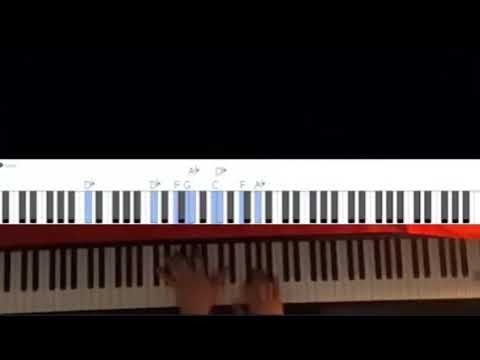
Placed so that fingers and posture are both clearly visible, ideally from above and slightly diagonal.
Nice to have
A separate microphone. It changes how much detail can be heard, and it is the cheapest upgrade available.

Start with a trial lesson.

  • Try it once€9.99A single trial lesson
  • Weekly€39.991 lesson per week
  • Twice weekly€72.992 lessons per week
  • Best value€99.993 lessons per week

Prices are per month. Lessons are booked in advance, and a cancelled lesson is not refunded — so tell me early if a week is not going to work.

Say who the lesson is for, roughly what level, and what made you look this up. That is enough to plan a first lesson properly.

Book a trial lesson